
Mauritius: Mauritius deports HIV-positive care worker despite anti-discrimination laws
Translated with Deepl. For original article in French, please scroll down
A Madagascan worker living with HIV in Mauritius: Deported the day after her moving testimony at the Candlelight Memorial
The reading of her poignant testimony had moved the crowd at the International AIDS Candlelight Memorial, held on 17 May at the Caudan Waterfront. The solidarity expressed and the appeals made were in vain. For the very next day, the woman we shall call Fandja was deported to Madagascar because she is living with HIV. Neither her professionalism nor her impeccable conduct could save her from what she feared so much. But despite anti-discrimination laws, Mauritius continues to apply this highly discriminatory and controversial measure.
“I am not asking for pity. I am simply asking for the right to live, to work and to receive treatment like a human being,” was the message she conveyed in her testimony at Caudan on Sunday evening. The moving account of this 45-year-old Malagasy worker was read out in the hope of countering this measure, which is still being applied by the Mauritian authorities. Having tested positive for HIV in Mauritius, she feared that her status would be disclosed: “The day that happens, I risk losing everything: my job, my healthcare, my stability, my dignity. My family will also lose its sole breadwinner. I will be deported and repatriated like a criminal. I have seen other compatriots of mine suffer this fate. Back home, how will I explain this sudden return? How will I face the stares, the shame, the humiliation? How will I support my family?”
This is precisely what happened to her the following day. “Around 10 am, my boss called me. He took me to the bank so I could collect my money and drove me to where I was living so I could collect some of my personal belongings. It was only at the airport that he told me he’d received a call from the authorities saying I was HIV-positive and that I had to be sent away immediately. ”
“It would break my parents’ hearts to learn that I’ve been deported because I’m living with HIV”
Feeling caught up in a whirlwind, she had left behind a large part of her belongings. “Just before take-off, I called my mother to tell her I was coming home that very evening. I told her I was coming for a few days’ unplanned holiday to rest. I’ll never be able to tell her the truth. My parents are old and ill. I’d come to Mauritius to help them get by. It would break their hearts to learn that I’ve been deported because I’m living with HIV,” says Fandja from Antananarivo.
“I’m at a loss; I don’t know what to do. My priority is to continue my treatment and reassess my plans. It’s very difficult for me.” Until then, everything had been going well for this woman who had been working in a care home for several years. “In Mauritius, every day, I wash, I feed, I help frail people to get up, to eat, to live with dignity. I look after Mauritian parents and grandparents as if they were my own. Every month, I send money to my family back in Madagascar. Children and loved ones depend on me to survive,” she said in her testimony at the Candlelight Memorial.
This 21st edition was organised by around twenty organisations in collaboration with the National Agency for Drug Control (NADC) with the aim of paying tribute to those who have died from HIV-related causes and supporting those affected and infected. The plight of foreign workers and students deported from Mauritius because of HIV was one of the issues highlighted. Hence Fandja’s testimony.
In his address, Nicolas Ritter, founder of PILS, emphasised: “Stigma has not disappeared. It has simply changed its face. It is sometimes more polite, more silent, but just as cruel as ever.” ’ Speaking after Fandja’s testimony had been read out, he added: ‘Earlier, we heard the voice of a woman who could not be with us this evening. And her absence alone speaks volumes. She could not come and take this microphone. She could not show her face. Because in Mauritius in 2026, speaking publicly about one’s HIV status—especially as a foreign worker—still means risking everything.”
Several advocacy campaigns and discussions had already been initiated with the authorities to counter this regressive measure. Moreover, it is at odds with more recent laws (the HIV & AIDS Act, the Equal Opportunities Act, the Workers’ Rights Act) which condemn any discriminatory measure or sanction against people living with HIV. Internationally, the implementation of this measure negatively impacts Mauritius’s image, as the country is seen as one of those still practising such discrimination.
“My treatment is working. I’m fine. I can’t infect anyone. I’m still working, loving and living.”
When Fandja arrived in Mauritius a few years ago, her HIV test was negative. She was then granted a work permit. She later learnt that her partner had been unfaithful to her, which prompted her to take an HIV test at the start of the year. “When the result came back, I thought I was going to die right there and then. I was HIV-positive. For days, I couldn’t sleep. Several times, I thought about suicide. I wondered if my life still had any meaning. Even today, I’m still battling depression. But I started my treatment straight away. I was supported. I’m still fighting. Today, my treatment is working. I’m doing well. I can’t infect anyone. I’m still working, loving, living,” she said in her testimony.
Everything started to unravel when her employer told her that all staff had to take another HIV test. “We hadn’t been consulted. We weren’t asked for our consent. We weren’t given any guarantees of confidentiality. All this despite the fact that the laws in Mauritius were written to protect anyone living with HIV. Refusing could mean losing our jobs.” From that moment on, her fear was that the authorities would disclose her status to her boss despite the prohibitions. That is precisely what happened.
Candles for those “whom Mauritius refuses to welcome and protect”
Nicolas Ritter points out: “Mauritian law protects people against forced testing and against discrimination based on HIV status. This law must be enforced. For everyone, Mauritians and non-Mauritians alike. And let us remember one thing. Our country has been built, generation after generation, by those who came from elsewhere. We are all, in one way or another, descendants of migrants. From India, Africa, Europe, Asia. So how can we close our doors to people who come here to work? And worse still: how can we close them because of their HIV status? A country is not judged solely by its economic growth. It is also judged by the way it treats the most vulnerable.”
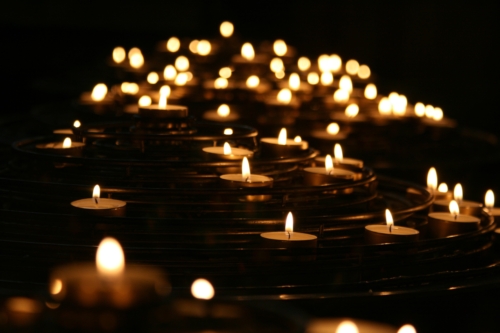
As every year, the Candlelight vigil ended with the lighting of candles, accompanied by the evening’s anthem, Enn Lalimier, sung by Éric Triton. On the eve of Fandja’s deportation, Nicolas Ritter declared: “Tonight, we are lighting candles for those we have lost. But also for those whom Mauritius still refuses to fully welcome or still refuses to protect. For this woman whose voice has been heard tonight.”
A few hours later, she was deported.
A legally contradictory measure
The practice of mandatory HIV testing for foreign workers in Mauritius is based primarily on the Immigration Act 2022, which allows for the exclusion from the territory of persons suffering from infectious or communicable diseases, as well as on the Non-Citizens (Employment Restriction) Act 1970, which makes the granting of a work permit conditional upon the presentation of a favourable medical certificate. Although HIV is not explicitly mentioned in the law, administrative procedures effectively require a screening test.
However, this requirement appears legally tenuous in light of the Mauritian legal framework and the country’s international commitments. The HIV and AIDS Act 2006 expressly prohibits any discrimination based on actual or presumed HIV status, particularly in the field of employment, whilst the Equal Opportunities Act 2008 also protects people living with HIV against discrimination in the workplace.
Although the Constitution does not explicitly mention health status among the prohibited grounds for discrimination, a challenge could be based on the fundamental rights guaranteed by Article 3 as well as on the international conventions ratified by Mauritius, notably the ICERD, the ICESCR, ILO Convention No. 111 and Recommendation No. 200 on HIV and the world of work. These international instruments consider mandatory HIV testing for the purpose of excluding individuals from employment or residence to be incompatible with the principles of non-discrimination and respect for human rights.
Travailleuse malgache vivant avec le VIH à Maurice : Déportée au lendemain de son témoignage qui avait ému le Candlelight
La lecture de son témoignage poignant avait ému la foule présente à l’International AIDS Candlelight Memorial, organisé le 17 mai au Caudan Waterfront. La solidarité exprimée et les appels lancés ont été vains. Puisqu’au lendemain même, celle que nous surnommerons Fandja a été déportée vers Madagascar parce qu’elle vit avec le VIH. Ni son professionnalisme ni son attitude irréprochable n’ont pu la sauver de ce qu’elle redoutait tant. Mais malgré les lois contre la discrimination, Maurice continue à appliquer cette mesure hautement discriminatoire et controversée.
« Je ne demande pas la pitié. Je demande simplement le droit de vivre, de travailler et de me soigner comme un être humain », tel avait été le message lancé dans son témoignage au Caudan, dans la soirée du dimanche. Le récit émouvant de cette travailleuse malgache de 45 ans avait été lu dans l’espoir de contrer cette mesure encore appliquée par les autorités mauriciennes. Dépistée positive au VIH sur le sol mauricien, elle craignait que son statut ne soit divulgué : « Le jour où cela arrivera, je risque de tout perdre : mon travail, mes soins, ma stabilité, ma dignité. Ma famille perdra aussi son seul soutien. Je serai expulsée du territoire et rapatriée comme une criminelle. Cela, j’ai vu d’autres de mes compatriotes subir ce sort. Au pays, comment ferai-je pour expliquer ce soudain retour ? Comment vais-je affronter les regards, la honte, l’humiliation ? Comment ferai-je pour faire vivre ma famille ? »
C’est précisément ce qui lui est arrivé le lendemain. « Vers 10h, mon patron m’a appelée. Il m’a conduite à la banque pour que je récupère mon argent et m’a conduite là où je vivais pour que je récupère une partie de mes effets personnels. C’est seulement à l’aéroport qu’il m’a informée qu’il avait reçu un appel des autorités lui indiquant que j’étais positive au VIH et qu’il fallait me faire partir tout de suite. »
« Cela briserait le cœur de mes parents d’apprendre que j’ai été déportée parce que je vis avec le VIH »
Se sentant prise dans un tourbillon, elle avait laissé une bonne partie de ses affaires. « Juste avant le décollage, j’ai appelé ma mère pour lui dire que je rentrais le soir même. Je lui ai dit que je venais pour quelques jours de vacances imprévues afin de me reposer. Je ne pourrai jamais lui dire la vérité. Mes parents sont vieux et malades. J’étais venue à Maurice pour les aider à survivre. Cela leur briserait le cœur d’apprendre que j’ai été déportée parce que je vis avec le VIH », témoigne Fandja depuis Antananarivo.
« Je suis déboussolée, je ne sais pas quoi faire. Ma priorité est de continuer mon traitement et de revoir mes projets. C’est très compliqué pour moi. » Jusqu’alors, tout allait bien pour cette femme engagée dans une maison de retraite depuis quelques années. « À Maurice, chaque jour, je lave, je nourris, j’aide des personnes fragiles à se lever, à manger, à vivre avec dignité. Je prends soin de parents, de grands-parents mauriciens comme si c’étaient les miens. Chaque mois, j’envoie de l’argent à ma famille restée à Madagascar. Des enfants, des proches comptent sur moi pour vivre », disait son témoignage lors du Candlelight Memorial.
Cette 21e édition avait été organisée par une vingtaine d’associations en collaboration avec la National Agency for Drug Control (NADC) dans le but de rendre hommage aux personnes décédées de causes liées au VIH et de soutenir les personnes affectées et infectées. Le sort des travailleurs et étudiants étrangers déportés de Maurice à cause du VIH avait été l’un des sujets mis en avant. D’où le témoignage de Fandja.
Dans son allocution, Nicolas Ritter, fondateur de PILS, avait fait ressortir : « La stigmatisation n’a pas disparu. Elle a changé de visage. Elle est parfois plus polie, plus silencieuse, mais toujours aussi cruelle. » Intervenant après la lecture du témoignage de Fandja, il ajoutait : « Nous avons entendu plus tôt la voix d’une femme qui n’a pas pu être parmi nous ce soir. Et son absence, à elle seule, dit déjà beaucoup. Elle ne pouvait pas venir prendre ce micro. Elle ne pouvait pas montrer son visage. Parce que dans le Maurice de 2026, témoigner publiquement de sa séropositivité, surtout quand on est une travailleuse étrangère ou un travailleur étranger, c’est encore risquer de tout perdre. »
Plusieurs actions de plaidoyer et des discussions avaient déjà été lancées avec les autorités pour contrer cette mesure rétrograde. Elle est, de surcroît, en porte-à-faux avec des lois plus récentes (HIV & AIDS Act, Equal Opportunities Act, Workers’ Rights Act) qui condamnent toute mesure discriminatoire ou toute sanction contre les personnes vivant avec le VIH. À l’international, l’application de cette mesure impacte négativement l’image de Maurice, considérée comme l’un des pays pratiquant encore cette discrimination.
« Mon traitement fonctionne. Je vais bien. Je ne peux infecter personne. Je continue à travailler, à aimer, à vivre »
Quand Fandja était arrivée à Maurice il y a quelques années, son test de dépistage était négatif. Elle avait alors obtenu son permis de travail. Elle avait plus tard appris que son compagnon lui avait été infidèle, ce qui l’avait encouragée à faire un test de dépistage au début de l’année. « Quand le résultat est tombé, j’ai cru mourir sur place. J’étais séropositive. Pendant des jours, je n’ai plus dormi. Plusieurs fois, j’ai pensé au suicide. Je me suis demandé si ma vie avait encore un sens. Aujourd’hui encore, je lutte contre la dépression. Mais j’ai commencé immédiatement mon traitement. J’ai été accompagnée. Je continue à me battre. Aujourd’hui, mon traitement fonctionne. Je vais bien. Je ne peux infecter personne. Je continue à travailler, à aimer, à vivre », disait son témoignage.
Tout a commencé à basculer lorsque son employeur lui a annoncé que tout le personnel devait refaire un test VIH. « Nous n’avions pas été consultés. On ne nous a pas demandé notre consentement. On ne nous a donné aucune garantie de confidentialité. Tout cela alors même que les lois à Maurice ont été écrites pour protéger toute personne vivant avec le VIH. Refuser pourrait signifier perdre notre travail. » À partir de ce moment, sa crainte était que les autorités communiquent son statut à son patron malgré les interdictions. C’est précisément ce qui s’est passé.
Des bougies pour celles et ceux « que Maurice refuse d’accueillir et de protéger »
Nicolas Ritter le rappelle : « La loi mauricienne protège les personnes contre le dépistage forcé et contre la discrimination fondée sur le statut VIH. Cette loi doit être appliquée. Pour tous et toutes, Mauriciens ou non-Mauriciens. Et rappelons-nous une chose. Notre pays s’est construit, génération après génération, avec celles et ceux qui sont venus d’ailleurs. Nous sommes tous, d’une manière ou d’une autre, des descendants de migrations. Venus d’Inde, d’Afrique, d’Europe, d’Asie. Alors comment pouvons-nous fermer nos portes à des personnes qui viennent travailler ici ? Et pire encore : comment pouvons-nous les fermer à cause d’un statut sérologique ? Un pays ne se juge pas uniquement à sa croissance économique. Il se juge aussi à la manière dont il traite les plus vulnérables. »
Comme chaque année, le Candlelight a pris fin par l’allumage des bougies, accompagné de l’hymne de la soirée, Enn Lalimier, chanté par Éric Triton. À la veille de l’expulsion de Fandja, Nicolas Ritter déclarait : « Ce soir, nous allumons des bougies pour celles et ceux que nous avons perdus. Mais aussi pour celles et ceux que Maurice refuse encore d’accueillir pleinement ou refuse encore de protéger. Pour cette femme dont la voix a été portée ce soir. »
Quelques heures après, elle était déportée.
Une mesure légalement contradictoire
La pratique du dépistage obligatoire du VIH pour les travailleurs étrangers à Maurice repose principalement sur l’Immigration Act 2022, qui permet d’exclure du territoire les personnes atteintes de maladies infectieuses ou transmissibles, ainsi que sur le Non-Citizens (Employment Restriction) Act 1970, qui subordonne l’obtention d’un permis de travail à la présentation d’un certificat médical favorable. Bien que le VIH ne soit pas explicitement mentionné dans la loi, les procédures administratives imposent en pratique un test de dépistage.
Cependant, cette exigence apparaît juridiquement fragile au regard du cadre légal mauricien et des engagements internationaux du pays. La HIV and AIDS Act 2006 interdit expressément toute discrimination fondée sur le statut sérologique réel ou présumé, notamment dans le domaine de l’emploi, tandis que l’Equal Opportunities Act 2008 protège également les personnes vivant avec le VIH contre les discriminations professionnelles.
Bien que la Constitution ne mentionne pas explicitement le statut de santé parmi les motifs de discrimination interdits, une contestation pourrait s’appuyer sur les droits fondamentaux garantis par l’article 3 ainsi que sur les conventions internationales ratifiées par Maurice, notamment l’ICERD, le PIDESC, la Convention n°111 de l’OIT et la Recommandation n°200 sur le VIH et le monde du travail. Ces instruments internationaux considèrent le dépistage obligatoire du VIH à des fins d’exclusion de l’emploi ou du séjour comme incompatible avec les principes de non-discrimination et de respect des droits humains.