
US: Chicago group support LGBTQ+ and HIV-positive migrants in and beyond detention
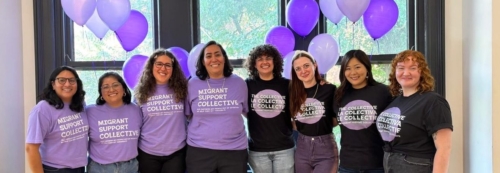
A Chicago-based immigrant rights organization is working to support LGBTQ+ migrants in immigration detention through a mix of direct services, arts programs and advocacy aimed at shifting public narratives around immigration.
Migrant Support Collective, founded in 2020, focuses on meeting the immediate needs of LGBTQ+ migrants who are either detained or recently released.
“We usually tell people that our partners get people out of detention, and we try to get them through it,” said Beck Sroczynski, the organization’s program director.
The organization combines “micro level” direct services to support migrants in detention with “macro level” advocacy work aimed at “shifting and interrupting xenophobic and transphobic narratives around LGBTQ+ migrants,” Sroczynski said.
The work began in response to the harms faced by LGBTQ+ people in detention, such as harassment, physical violence and medical neglect tied to their sexual orientation, gender identity or HIV status, Sroczynski said.
These challenges have been well-documented, including in a 2024 report from the National Immigrant Justice Center finding that nearly all LGBTQ+ and HIV-positive migrants surveyed had experienced harm while in detention.
Advocates have also raised concerns about the lack of transparency in federal detention systems, including gaps in data collection on transgender people in ICE custody.
“There are so many unique challenges that queer folks—especially gender nonconforming, transgender and HIV positive folks—face while experiencing detention,” Sroczynski said.
These challenges are often compounded when LGBTQ+ migrants don’t have access to outside support networks, Sroczynski said.
“For most of them, we are some of the only connections they have to the world outside of detention,” Sroczynski said.
In response, Migrant Support Collective has rolled out a series of programs for migrants in detention that center LGBTQ+ people.
One initiative, the LGBTQ+ Emotional Support program, sends resource packets to migrants that contain self-reflection exercises, identity-based materials and coping strategies that can help them navigate detention.
The packets are currently available in English and Spanish, with an Arabic translation in progress. They were developed in partnership with pro bono mental health professionals and sent to migrants through referrals from partner organizations.
Migrant Support Collective is also piloting an Art as Advocacy program, which provides detained migrants with art supplies and prompts to support creative expression and connection.
Organizers are planning a community event and art installation for later this year in Chicago where migrants can opt to have their artwork displayed, Sroczynski said. The initiative is designed to help with the isolation of detention while creating opportunities for migrants to share their stories.
Another key effort is the Data Transparency Initiative, which empowers LGBTQ+ migrants to share their own stories in a way that counters narratives that erase queer voices from immigration discourse.
Sroczynski said the program aims to “create opportunities for storytelling by detained queer migrants” while also working toward “increasing transparency and accountability” and advancing structural change.
As Migrant Support Collective grows, the organization is looking to expand its scope to support immigrants beyond detention.
The group is working on a reentry care package for LGBTQ+ and HIV-positive migrants who have been released from detention and are resettling in the Chicago area. It’s a partnership with the Chicago Center for HIV Elimination.
In addition to its LGBTQ+-specific programming, the organization continues to run its original library program, which provides detained migrants with books and journals upon request.
The program reflects the organization’s grassroots origins, which began as a small effort called “Books for Migrants.”
“That started when Michelle Velazquez and I were working at the National Immigrant Justice Center and we saw a lot of people were asking for books while in detention,” Sroczynski said.
Since then, the organization has grown significantly, supported in part by its fiscal sponsorship through Organized Communities Against Deportations.
Sroczynski said the partnership, established in 2024, has been critical to expanding its capacity.
“They provide so much support with our operations,” they said, citing fundraising connections, program feedback and administrative support. “We definitely wouldn’t be where we are today without them.”
Still, the need for additional support remains urgent—particularly for transgender migrants, Sroczynski said.
“I think that it is difficult to overemphasize the urgency of supporting and centering queer migrants, especially transgender migrants,” Sroczynski said.
